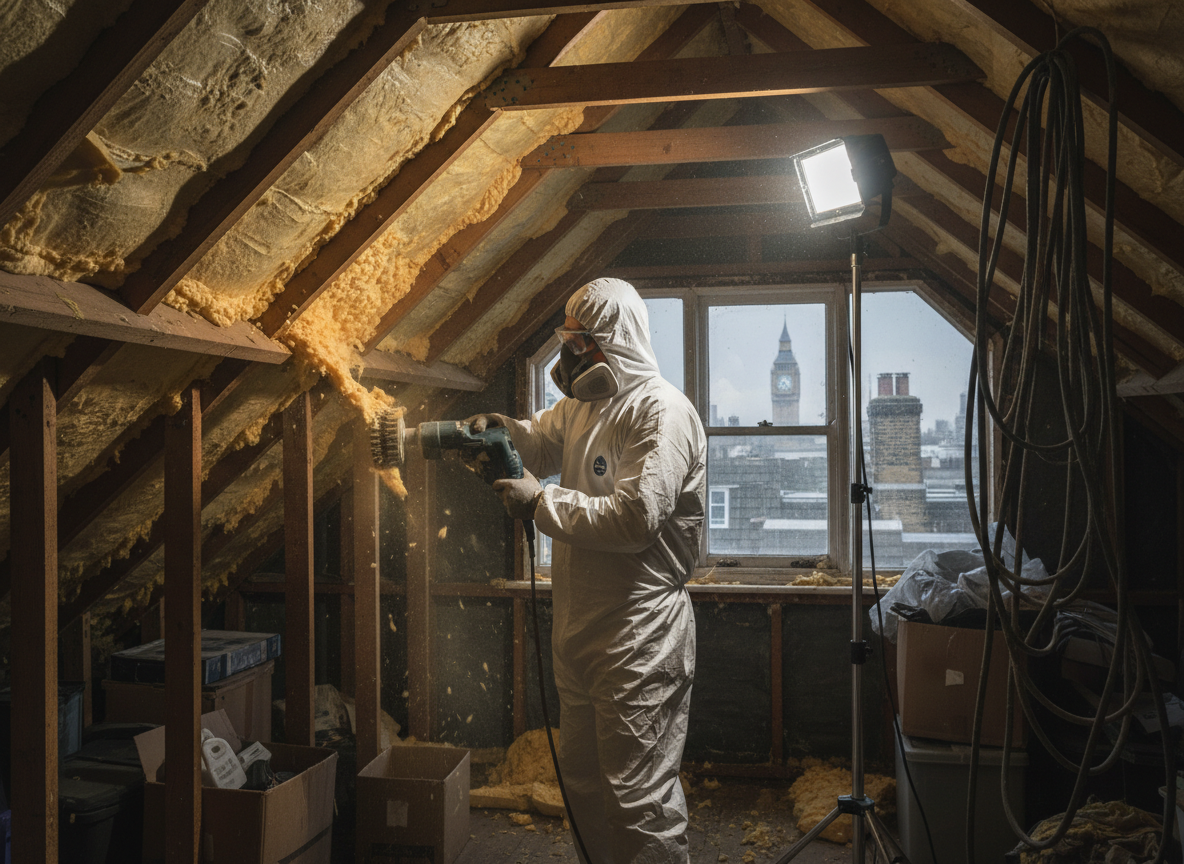
Thermal spray foam removal in central London often involves older Victorian and Edwardian terraces around Westminster and Soho where foam was applied decades ago to lofts and under floors. These properties frequently feature tight roof voids, original timber joists and limited access points that require careful cutting and extraction to avoid damaging historic lath and plaster ceilings below. Moisture from the Thames basin can leave foam saturated, increasing weight and adhesion so crews must section the material rather than pull large sheets.
London weather patterns with frequent damp winters and sudden temperature shifts make removal timing critical. Foam installed in the 1990s and early 2000s often degrades faster in lofts that experience condensation from poor ventilation common in converted flats near Haymarket. Technicians check for hidden electrical cables and pipework before starting because many period properties have been rewired multiple times without updated drawings.
Removal crews work around listed building constraints and leaseholder permissions that apply throughout the City of Westminster. Dust containment is essential in multi-occupancy buildings where neighbours share party walls, and debris must be bagged and removed via narrow staircases rather than external skips in congested streets.
After extraction the team inspects joists for rot and advises on ventilation upgrades suited to London’s variable humidity. Replacement insulation choices are discussed only after confirming the roof structure can support new materials without adding excessive load to older ceilings.
Technician insight
In London the thing that catches most people out with thermal spray foam removal is how saturated the foam gets in unventilated lofts of 1890s terraces around Westminster. The extra weight and stickiness means you cannot simply peel it off in sheets the way you can in newer builds further out in Greater London.
Soho Loft Extraction
Homeowner in a converted 1900s building near Haymarket reported musty smells and cold spots. We found saturated spray foam clinging to original joists with hidden condensation trails. Sections were cut out carefully to protect lath ceilings, debris removed through the narrow staircase, and the loft left ready for improved ventilation.
How it works
- 1
Site Assessment
Inspect loft or underfloor spaces in the London property, identify foam type, note access routes and check for wiring or pipework.
- 2
Containment Setup
Seal work areas with sheeting to control dust, especially important in terraced homes with shared walls around central London.
- 3
Sectioned Removal
Cut foam into manageable pieces using hand tools, extract material while protecting original timber and ceilings.
- 4
Clearance and Inspection
Remove all debris, vacuum residues and examine joists for moisture damage before leaving the site.
Pricing
Costs vary by property age, foam depth and access difficulty in central London terraces.