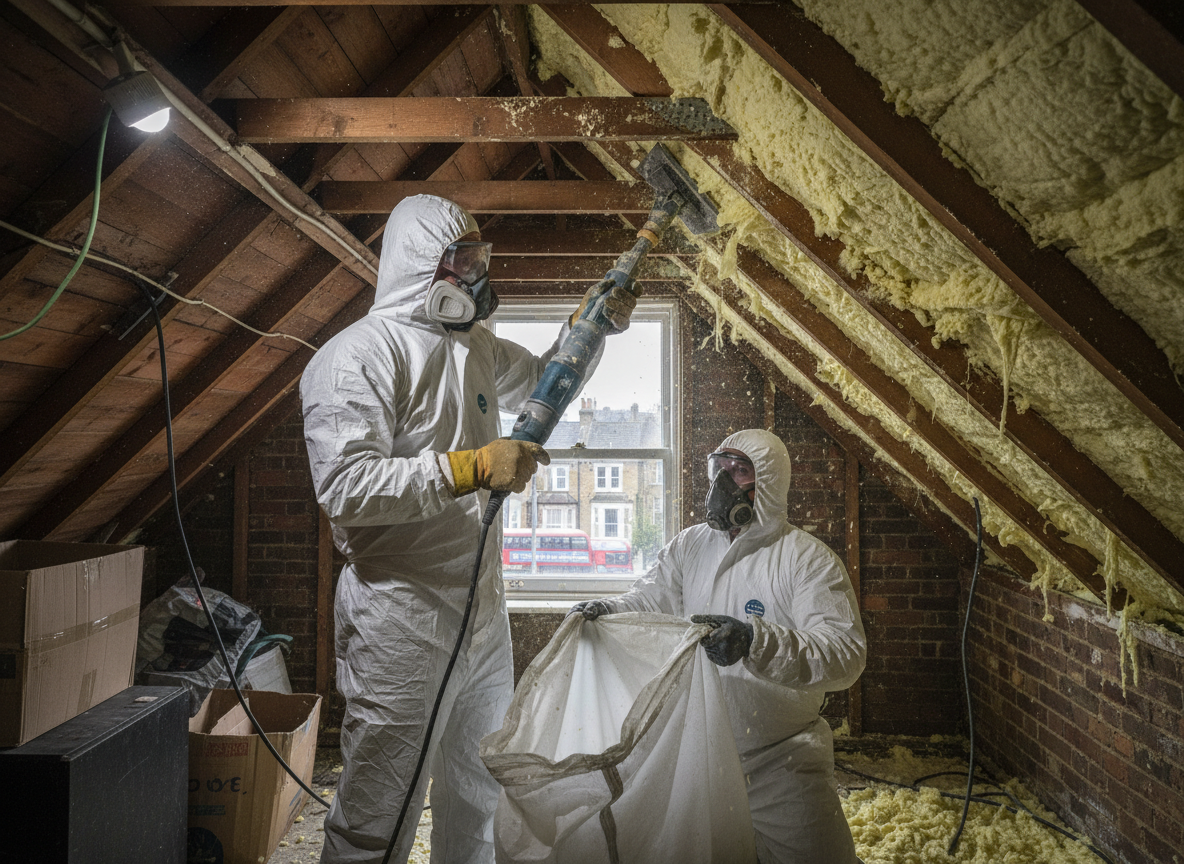
London's older housing stock, especially Victorian terraces in neighborhoods like Islington and Hackney, often features spray foam applied directly to lath and plaster or between joists in lofts and walls. Removing it same day requires careful separation to avoid damaging fragile ceilings or releasing fibres into living spaces. Damp London weather accelerates foam degradation, trapping moisture against timber and creating hidden rot that must be checked during extraction.
Closed-cell foam bonds tightly to brick and timber in period properties, while open-cell types crumble more easily but leave residue that affects new insulation adhesion. Building regulations in the London area require ventilation checks after removal to prevent condensation issues common in the region's mild, wet winters. Homeowners frequently overlook electrical cables and pipework embedded in the foam, which can be nicked if the wrong cutting method is used.
Edge cases include foam installed over original lathe in pre-1930s homes where full removal risks ceiling collapse, requiring sectional work instead. Same day jobs in central London terraces demand quick debris clearance to keep streets clear, as narrow access points limit equipment size. Always test for hidden hazards like old wiring before starting, since rushed removal in damp conditions can spread mould spores through the property.
Technician insight
In London, the thing that catches most people out with same day Spray Foam Removal is the damp climate hitting Victorian terraces in places like Camden, where foam traps moisture against joists and creates rot that only shows once you start cutting.
Loft Foam in East London Terrace
Homeowner called after noticing musty smells in a 1920s Hackney property. We found closed-cell foam holding water against rafters. Removed it same day, cleared residue, and opened vents. Outcome: loft dried out without further timber damage.
How it works
- 1
Site Assessment
Inspect foam type, depth, and any embedded services in the London property before starting removal.
- 2
Containment Setup
Seal off rooms to prevent dust migration through older ventilation paths common in Greater London homes.
- 3
Foam Extraction
Cut and remove sections methodically while monitoring for moisture or structural weaknesses.
- 4
Cleanup and Ventilation Check
Clear debris and confirm airflow meets local standards to avoid future condensation problems.
Pricing
Cost depends on foam depth, access difficulty in older London properties, and whether hidden moisture or wiring is present.