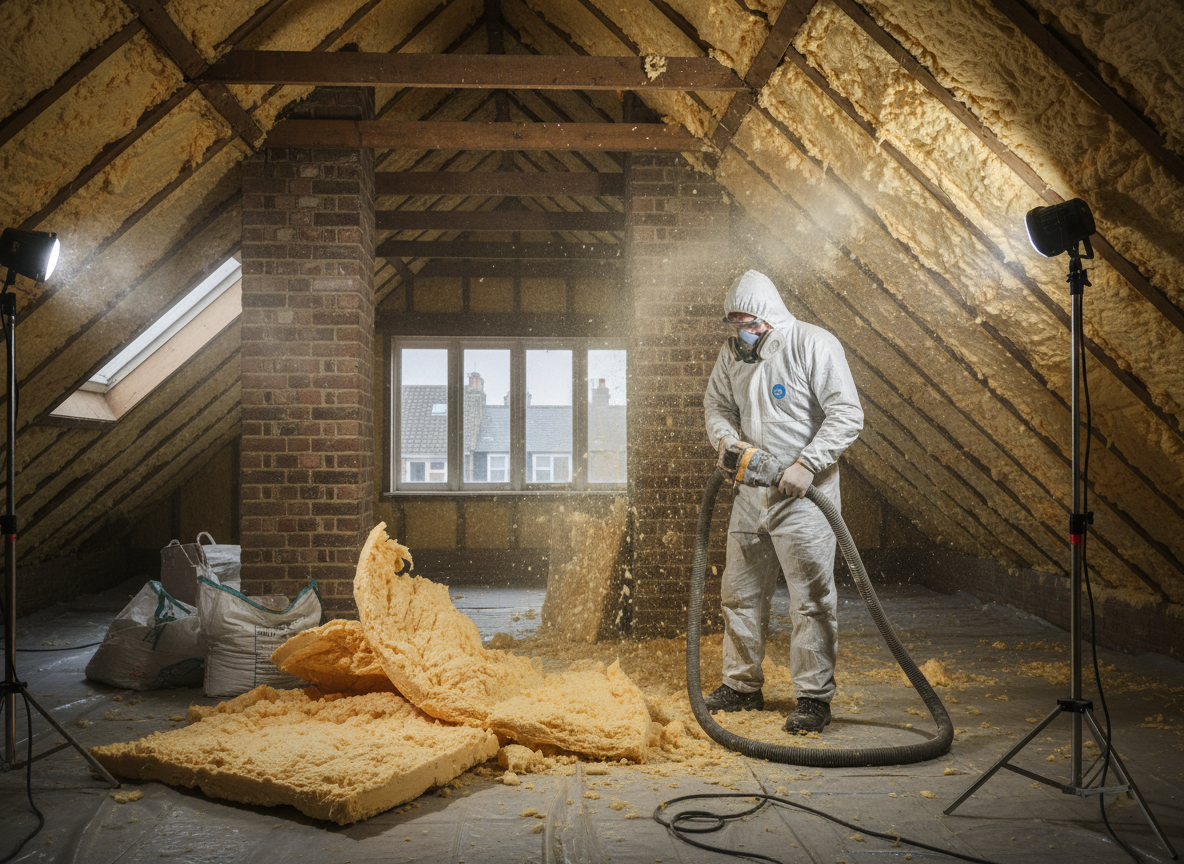
Commercial buildings in London often feature spray foam applied directly to concrete soffits or metal decking in warehouses and older office blocks around zones like Canary Wharf and the City. Removal requires isolating HVAC systems first to prevent foam particles circulating through shared ductwork, then using negative-air machines to contain dust before mechanical scraping begins. Edge cases include foam that has bonded to asbestos-containing fireproofing on steel beams, which must be surveyed and managed under current HSE guidelines before any foam work starts.
Weather patterns in the capital add another layer: summer humidity slows solvent-based breakdown of closed-cell foam while winter damp in unheated units can cause residual moisture to trap behind newly exposed insulation layers. Technicians working on sites near the Thames or in basement car parks frequently encounter higher moisture readings that demand extra drying time before re-insulation. Failure to address these conditions leads to mould regrowth within months of the job.
Code compliance on commercial sites means coordinating with building control when foam removal exposes original fire compartment lines or alters thermal performance calculations. In multi-tenant buildings common throughout Greater London, work must be phased around trading hours, often requiring weekend or overnight shifts to keep neighbouring units operational.
Proper disposal routes are critical; foam waste from London commercial jobs must go through licensed carriers to approved facilities rather than general construction skips, and site logs are kept for each project to satisfy local authority audits.
Technician insight
In London, the thing that catches most people out with Commercial Spray Foam Removal is the hidden asbestos fireproofing on steel beams inside 1960s-1980s office blocks around the City and South Bank. One missed test and the whole job stops while licensed abatement crews are brought in, turning a three-day removal into a two-week programme.
Warehouse Unit in Bermondsey
Foam on a metal-deck roof in a converted warehouse had started delaminating after years of roof leaks. We found water trapped behind the foam along the valley gutters. Extraction was completed over two overnight shifts using scaffold towers inside the unit, waste was removed the same morning, and the client reopened for deliveries without losing a trading day.
How it works
- 1
Site Survey and Risk Assessment
Technicians visit the commercial property to map foam locations, test for hidden hazards such as asbestos or electrical runs, and confirm access routes through loading bays or service corridors.
- 2
Containment and Ventilation Setup
Negative pressure enclosures and HEPA filtration units are installed to protect occupied areas, with temporary barriers erected around the work zone to limit dust migration into adjacent offices or retail spaces.
- 3
Foam Extraction and Surface Cleaning
Mechanical removal combined with approved solvents strips the foam layer by layer, followed by thorough cleaning of the substrate to remove residue before any new insulation or coatings are applied.
- 4
Waste Removal and Site Handover
All foam debris is bagged and removed via licensed carriers; final inspection confirms the area meets clearance standards and the space is returned to the client ready for immediate use.
Pricing
Pricing varies by building height, foam thickness, and access restrictions typical in central London commercial stock; quotes are provided after on-site survey.