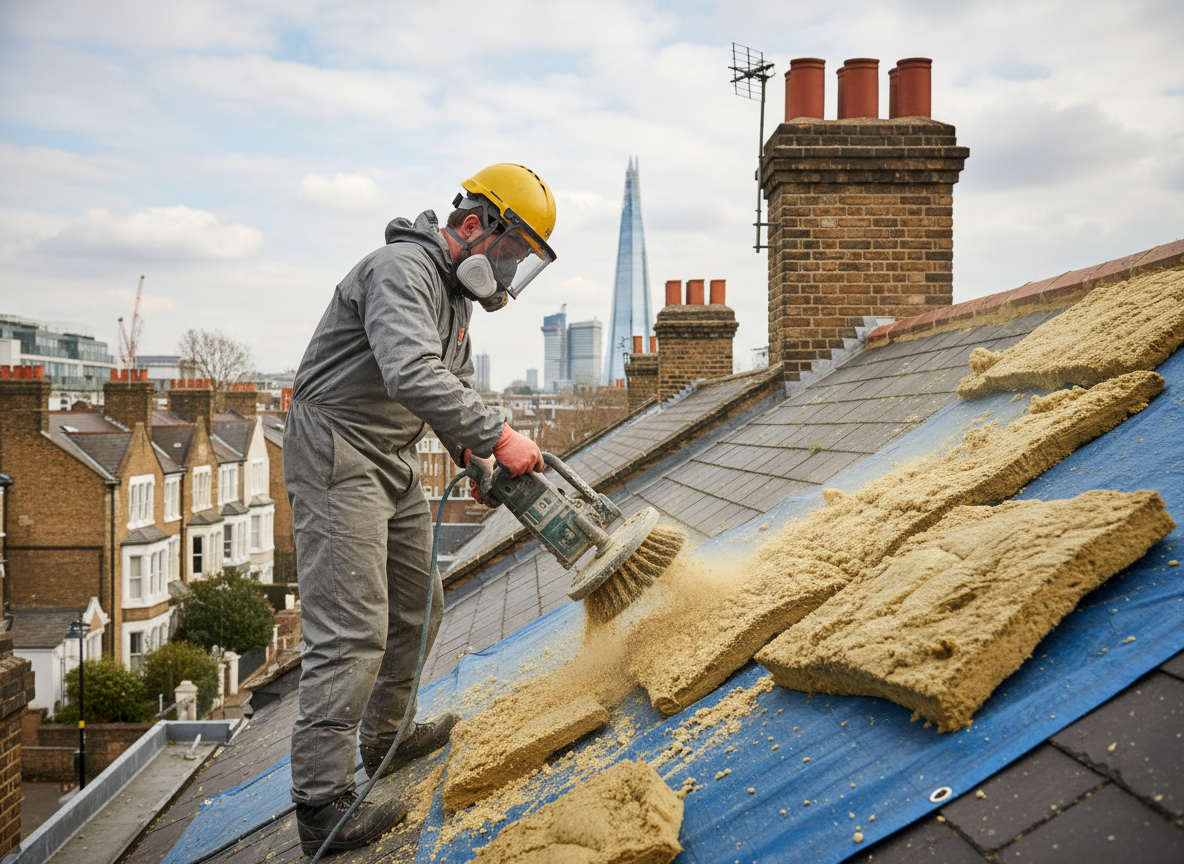
Roof spray foam removal in London often involves older terraced properties in neighborhoods such as Islington and Southwark where closed-cell foam was applied directly over original slate or tile underlays. The foam bonds aggressively to timber sarking and can trap moisture against rafters, leading to rot that only becomes visible once stripping begins. Crews must work from scaffold towers or cherry pickers because many streets lack rear access, and dust extraction is essential to avoid contaminating neighboring gardens.
Edge cases appear frequently in post-war flats around Hackney where foam was sprayed into eaves without ventilation gaps. Removing it requires cutting back to sound substrate while preserving any remaining felt or battens that still provide weather protection. Local planning rules in conservation areas can restrict external equipment hours, forcing crews to schedule noisy mechanical removal for early mornings only.
Code considerations include checking that new insulation meets current Building Regulations Part L after foam is gone, especially where roof voids now need proper ventilation to prevent condensation on chimney breasts common in Georgian conversions. Homeowners sometimes discover asbestos flashings during removal, requiring immediate halt and licensed handling before work resumes.
Technician insight
In London, the thing that catches most people out with roof spray foam removal is how often Victorian terraces in areas like Bloomsbury have foam bridging the original eaves vents, so once it is stripped the roof suddenly needs new ventilation work that was never budgeted for.
Foam Removal on a Camberwell Terrace
Problem: homeowner noticed damp patches on bedroom ceilings after years of spray foam on the roof. What we found: closed-cell foam had blocked all eaves vents and trapped condensation against 1890s rafters. What we did: removed foam in controlled sections from scaffold, cleared debris, and confirmed rafters were still sound. Outcome: loft now ventilated and ready for proper insulation upgrade.
How it works
- 1
Site Assessment
Inspect roof structure, access points, and any signs of trapped moisture or timber damage from street level and loft entry.
- 2
Containment Setup
Erect dust barriers and ground protection to contain debris, particularly important on terraced roofs with shared party walls.
- 3
Mechanical Removal
Use specialist scrapers and vacuums to strip foam without damaging original slates or rafters, working in sections to maintain roof integrity.
- 4
Substrate Repair Check
Examine exposed timbers and underlay, flagging any rot or missing ventilation for follow-up works.
- 5
Final Clearance
Remove all waste, clean the loft space, and leave the roof ready for new insulation or inspection.
Pricing
Upfront quotes follow a site visit because roof pitch, access restrictions, and hidden timber damage in London properties affect final scope.