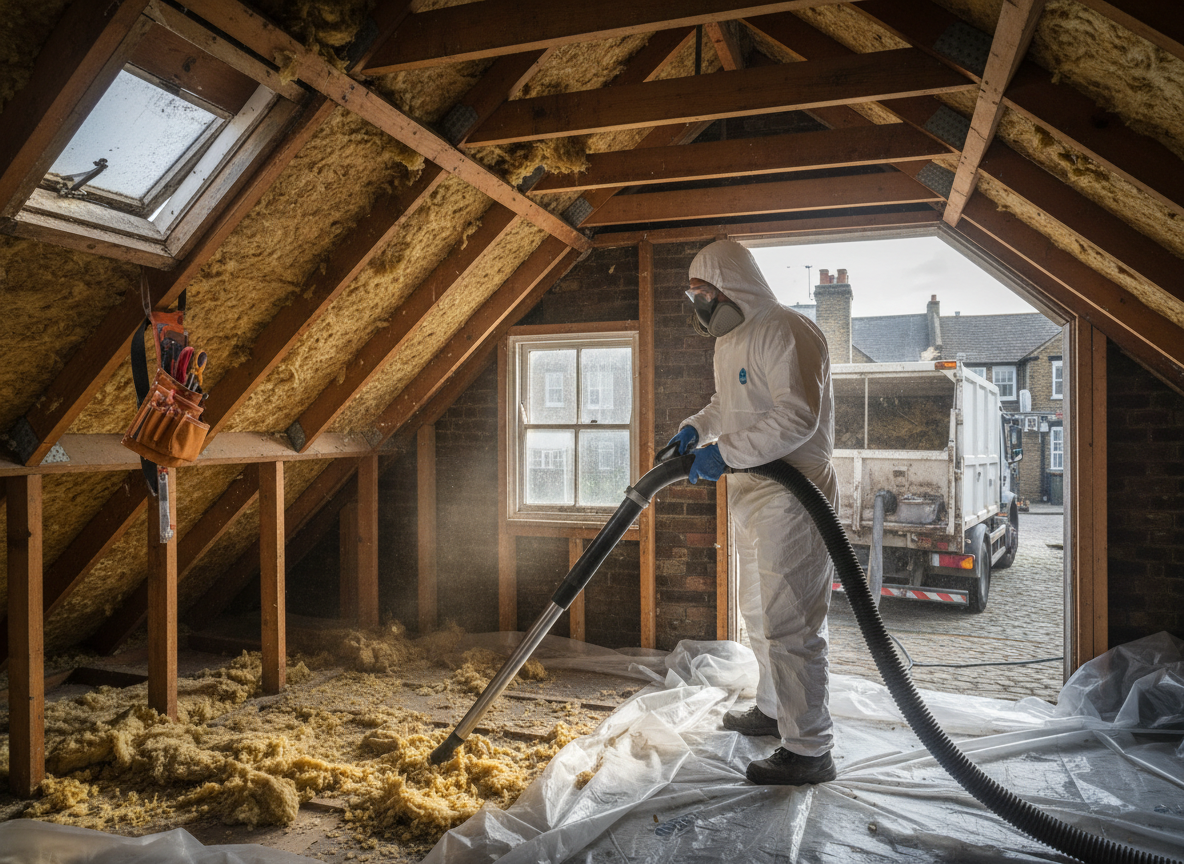
London's older housing stock, particularly Victorian terraces in areas like Islington and Camden, frequently contains closed-cell spray foam applied decades ago to combat damp and heat loss. Removing it requires careful assessment of timber joists and roof voids because the foam can trap moisture against original lath and plaster or brickwork, especially during the city's frequent winter rainfall. Technicians must isolate sections to prevent dust migration into living spaces below while complying with local waste disposal rules for polyurethane materials.
Post-war flats in Southwark and Tower Hamlets often have foam injected into cavity walls that have since failed, allowing water ingress from driving rain. Extraction here involves drilling strategic access points, vacuum removal and checking for hidden corrosion on metal fixings. Homeowners in these properties frequently discover that partial removal leaves residue that continues to degrade neighbouring insulation or affect ventilation stacks common in the capital's dense street layouts.
Greater London weather patterns mean jobs booked in autumn must account for high humidity levels that slow foam curing and increase adhesion to substrates. Crews working near the Thames or in low-lying zones like parts of Greenwich also contend with higher groundwater that can affect basement or ground-floor applications. Proper negative-air setups and HEPA filtration protect both the property and adjacent neighbours in tightly packed terraces.
Technician insight
In London, the thing that catches most people out with insulation removal service is the hidden voids behind original cornices and between party walls in Victorian terraces around Bloomsbury and Fitzrovia; once the foam is gone you often find decades of trapped damp that needs addressing before any new insulation goes back in.
Loft foam removal in a Hackney terrace
Homeowner noticed musty smells after heavy autumn rain. Inspection revealed closed-cell foam trapping moisture against rafters in a 1890s terrace. We set up containment, extracted the foam in sections, cleared residue and opened vents to allow drying before handover.
How it works
- 1
Site Assessment
Survey the property to map foam locations, check for hidden voids and note any signs of moisture or structural concerns typical in London stock.
- 2
Containment Setup
Install dust barriers, negative air machines and floor protection to prevent debris spreading through multi-storey terraces and flats.
- 3
Foam Extraction
Use mechanical and vacuum methods to remove spray foam from lofts, walls or ceilings while preserving original timber and brickwork.
- 4
Waste Removal and Disposal
Bag and transport all material off-site following Greater London waste regulations, then ventilate the space to reduce residual odours.
- 5
Final Inspection
Check voids for remaining residue, assess ventilation paths and advise on next steps for re-insulation or repairs.
Pricing
Cost depends on access, depth of foam and property type; quotes provided after inspection.