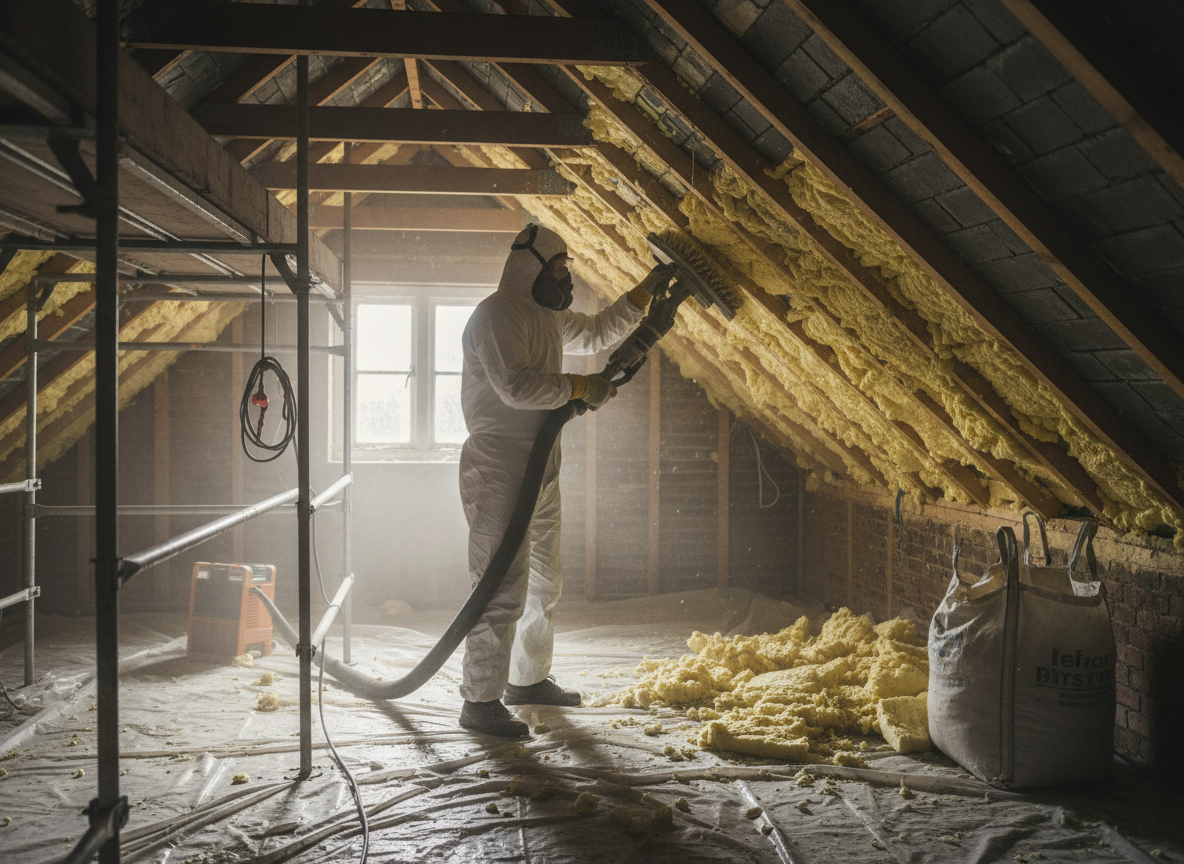
London’s Victorian and Edwardian terraces in neighbourhoods such as Islington and Hackney often received spray foam directly onto lath and plaster or between rafters. Removing it requires cutting access panels from below while protecting original ceilings that can crack under vibration. Moisture trapped against the roof deck is common after decades of variable weather, so every job starts with checking for rot before any foam is touched.
Greater London’s narrow lofts and shared party walls mean debris cannot simply be dropped; all material must be bagged and lowered through internal hatches or external scaffolding. Older properties frequently have hidden electrical cables and lead pipes embedded in the foam, so isolation and inspection precede any mechanical removal. Homeowners in these homes also face stricter planning rules when external access is needed on listed buildings.
Weather patterns in the capital bring sudden rain that can enter once the foam is disturbed, so temporary roofing protection is fitted on the same day. Soil conditions around older foundations can exacerbate damp if water is allowed to pool during the work, requiring careful sequencing of extraction and ventilation restoration.
Access Challenges in Period Properties
Tight roof voids and fragile ceilings in pre-1919 London homes demand hand tools and dust extraction rather than heavy machinery. Scaffolding permits are often required on terraced streets, adding planning time that must be factored into every schedule.
Technician insight
In London, the thing that catches most people out with Attic spray foam removal is how often the foam was sprayed straight onto fragile lath and plaster in Victorian terraces around areas like Hackney; one wrong cut and the ceiling comes down with it.
Islington Terrace Loft Clearance
Homeowner noticed musty smells and sagging ceiling plaster in a 1890s terrace. Inspection found saturated foam trapping moisture against the roof deck. We created internal access panels, extracted the foam in sealed bags, repaired the lath, and restored ventilation. Ceiling remained intact and damp readings returned to normal.
How it works
- 1
Initial Inspection
Survey the attic for foam depth, substrate condition, wiring, and moisture levels using moisture meters and endoscopes.
- 2
Access Preparation
Create controlled entry points from inside or via scaffold, install dust containment and temporary weather protection.
- 3
Foam Extraction
Mechanically and manually remove foam in sections, bagging material immediately to prevent spread through the property.
- 4
Substrate Repair and Ventilation
Repair any damaged lath or plaster, restore airflow, and advise on replacement insulation options suitable for London’s climate.
Pricing
Upfront written quotes after inspection; final cost depends on access difficulty and volume of material in older London properties.