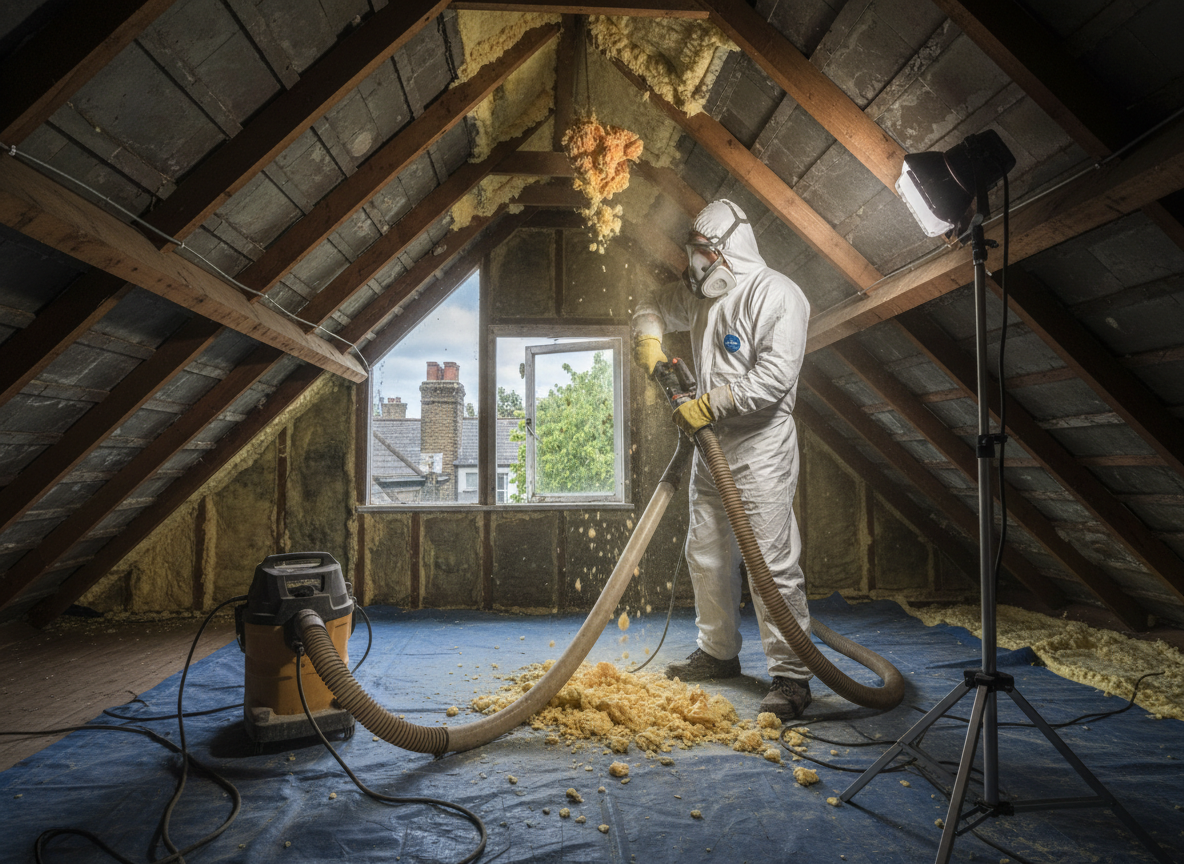
Southwark's mix of Victorian terraces and converted warehouses often received spray foam insulation in lofts and under floors during earlier energy upgrades. Many of these properties now need the material removed because it traps moisture against original brick and timber. Crews working from 80 Haymarket reach jobs via Borough High Street or Jamaica Road, bringing equipment that fits through the narrow side entrances common on streets like Great Guildford and Copperfield.
Winter damp from the Thames and summer heat both accelerate problems in Southwark homes where foam was applied directly to rafters. Removal teams strip the material without disturbing original lath and plaster ceilings, then allow the structure to dry before any new insulation goes in. Access to upper floors in three-storey terraces around Tabard Street or Redcross Way requires sectional ladders rather than large vans, keeping disruption low for residents near local schools and markets.
Around Southwark
We regularly work near:
- 📍Borough Market
- 📍Tate Modern
- 📍Shakespeare's Globe
- 📍Southwark Cathedral
- 📍London Bridge
- 📍Tabard Street
Spray Foam Removal London in Southwark — Local Notes
- •Victorian terraces between Borough and London Bridge frequently have narrow loft hatches and shared chimney stacks that complicate foam extraction and require hand tools instead of heavy machinery.
- •Properties along Bankside and near the Thames experience higher humidity, so crews ventilate roof voids immediately after removal to prevent mould returning to original joists.
- •Cobbled mews and pedestrian-only lanes around Southwark Cathedral limit vehicle size, meaning equipment is carried in by hand from the nearest legal parking on Great Suffolk Street.
- •Many 19th-century school buildings and warehouses now converted to flats retain original roof profiles that were over-insulated; removal must preserve slate and leadwork visible from street level.