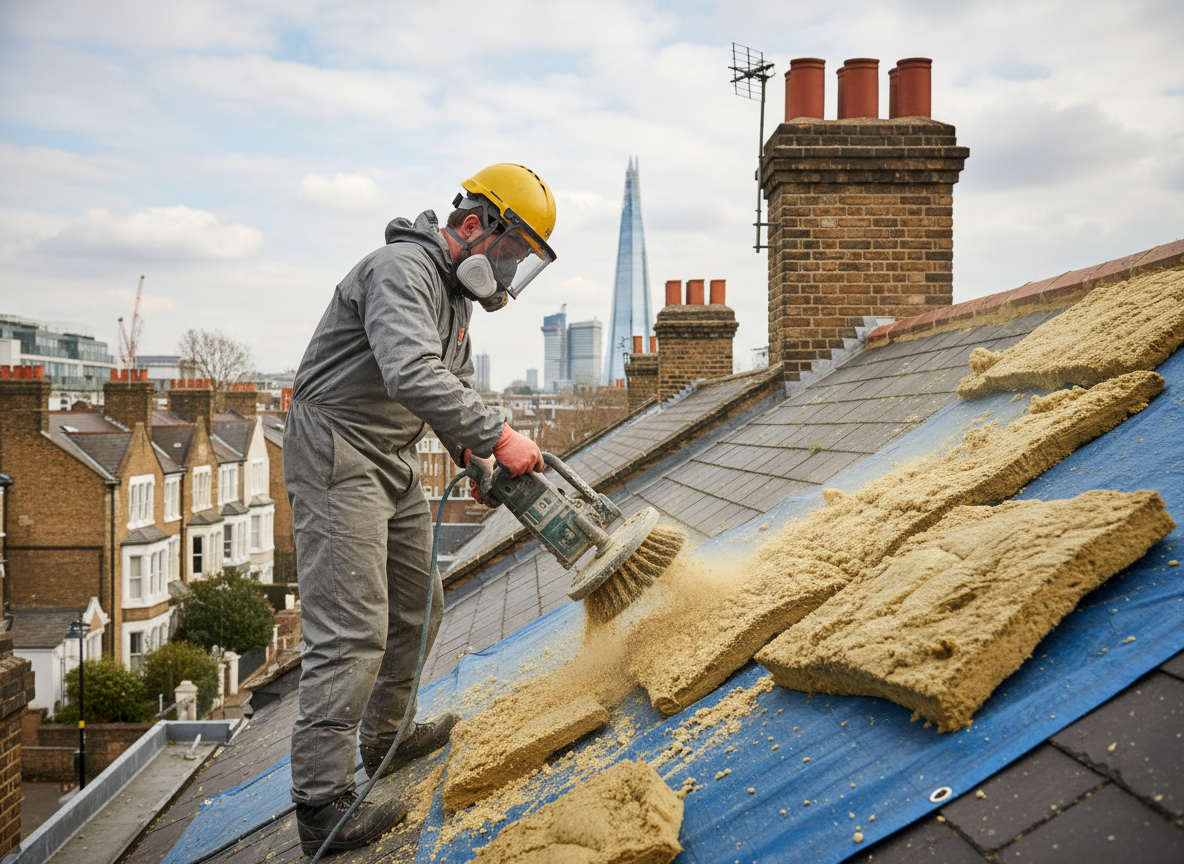
Lambeth's mix of early Victorian terraces and post-war flats around Kennington Road and Clapham Road often received spray foam insulation in the 2000s. Removing it now requires careful access through narrow rear yards and shared lofts that back onto the railway lines. Crews based at 80 Haymarket, SW1Y 4TE reach these streets within twenty minutes and can work through the night when residents request quieter daytime hours.
Proximity to the Thames brings higher humidity into many Lambeth lofts. Foam that once seemed to seal roofs now traps moisture against original timber, especially in properties between Lambeth Palace and Vauxhall Bridge. Local removal focuses on full extraction followed by ventilation checks so the original roof structure can breathe again without introducing damp into neighbouring homes.
Streets such as Kennington Lane and Wandsworth Road limit van size and equipment staging. Teams stage smaller kits on foot from nearby parking and use low-noise tools to avoid disturbing the Oval crowd on match days or hospital shifts at St Thomas'.
Around Lambeth
We regularly work near:
- 📍Lambeth Palace
- 📍The Oval
- 📍Kennington Park
- 📍Brockwell Park
- 📍St Thomas' Hospital
- 📍Vauxhall Bridge
Spray Foam Removal London in Lambeth — Local Notes
- •Victorian terraces between Kennington and Stockwell have tight roof voids with original lath and plaster ceilings that must stay intact during foam removal.
- •Properties backing onto the mainline tracks experience vibration that can loosen partially removed foam, requiring extra securing before extraction.
- •Narrow access between terraced gardens on streets like Fentiman Road means equipment is carried in by hand rather than pumped from the street.
- •Higher moisture levels near the river mean post-removal inspections check for hidden damp in rafters that spray foam previously masked.