2026-10-22 ·
What Spray Foam Removal Costs in Greater London in 2024
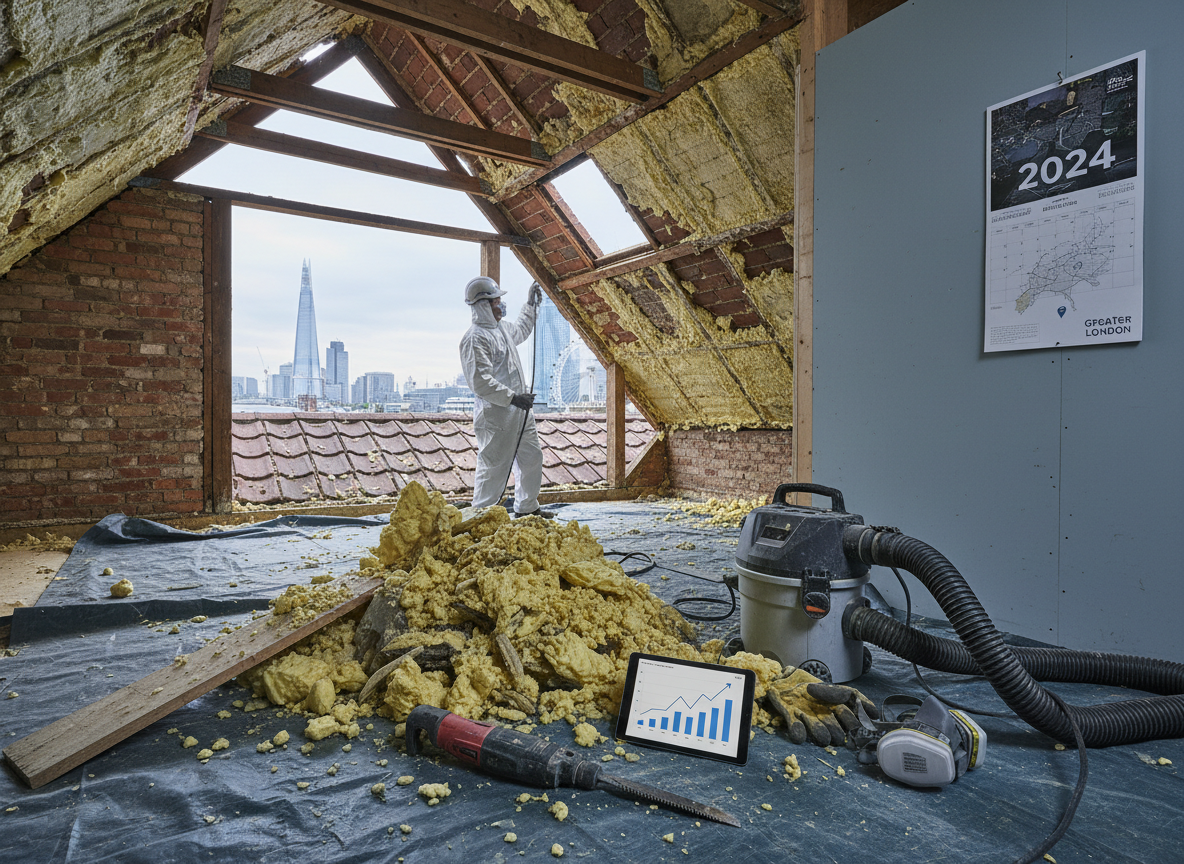
Spray foam removal in Greater London in 2024 typically ranges from £1,800 to £4,500 for an average residential loft. This baseline covers most two- to three-bedroom properties built before 1950 where closed-cell foam was applied directly to rafters. Larger Victorian terraces in Westminster or converted warehouses in Hackney push totals higher once scaffolding and waste disposal enter the equation.
Factors Driving Spray Foam Removal Prices in London
London's older housing stock creates specific cost drivers. Properties in Camden and Islington often feature narrow roof voids with limited access, requiring more manual labour than newer builds. Closed-cell foam bonds tightly to brick and timber, so removal time stretches compared with open-cell material. Weather patterns also matter: persistent winter damp in Southwark and Lambeth can complicate dust control during extraction, adding 10-15% to project length. Material disposal fees at licensed Greater London sites remain steady but rise when volumes exceed skip capacity.
Labour rates reflect central London travel and parking constraints. Crews working from a base near 80 Haymarket face congestion charges and restricted loading zones in Tower Hamlets and Greenwich, which lengthens each job. Homeowners should expect line items for protection sheeting, negative-air machines and post-removal inspections to satisfy mortgage lender requirements.
Typical Cost Breakdown by Property Type
- Victorian terrace loft (40-60 m²): £1,800–£2,800
- Edwardian semi with dormers (60-80 m²): £2,400–£3,600
- Mid-century flat roof extension (30-50 m²): £1,500–£2,400
- Commercial warehouse bay (100+ m²): £4,500–£7,000
These figures assume standard access and no asbestos. Adding dry ice blasting spray foam removal increases the upper end by roughly £800 because the technique reduces substrate damage in historic timber roofs common across Lambeth and Southwark.
How Borough-Specific Conditions Affect Quotes
Westminster conservation areas often require listed-building consent before any insulation disturbance, extending timelines by two to four weeks. In Hackney and Tower Hamlets, converted industrial units frequently have steel purlins that demand extra care during removal to avoid structural marking. Camden's basement-level flats add stairwell protection costs rarely seen in ground-floor Greenwich properties. Local soil conditions play a minor role, yet high water tables in parts of Southwark can increase moisture-related prep work before new insulation is installed.
Readers planning work in these boroughs can review current rules in the post on Local Building Regulations for Spray Foam Removal in London.
Recommended Next Steps for Accurate Pricing
Obtain measurements of the treated area and note whether the foam is open-cell or closed-cell before contacting contractors. Properties in Islington and Camden benefit from a pre-visit assessment that identifies hidden electrical runs and ventilation paths. Homeowners needing faster turnaround can explore 24/7 spray foam removal options that maintain the same pricing structure while fitting around work schedules. Always compare itemised quotes that separate labour, waste handling and any required residential spray foam removal certifications.