2026-10-22 ·
How to Spot Problems with Spray Foam Insulation in London Terraced Houses
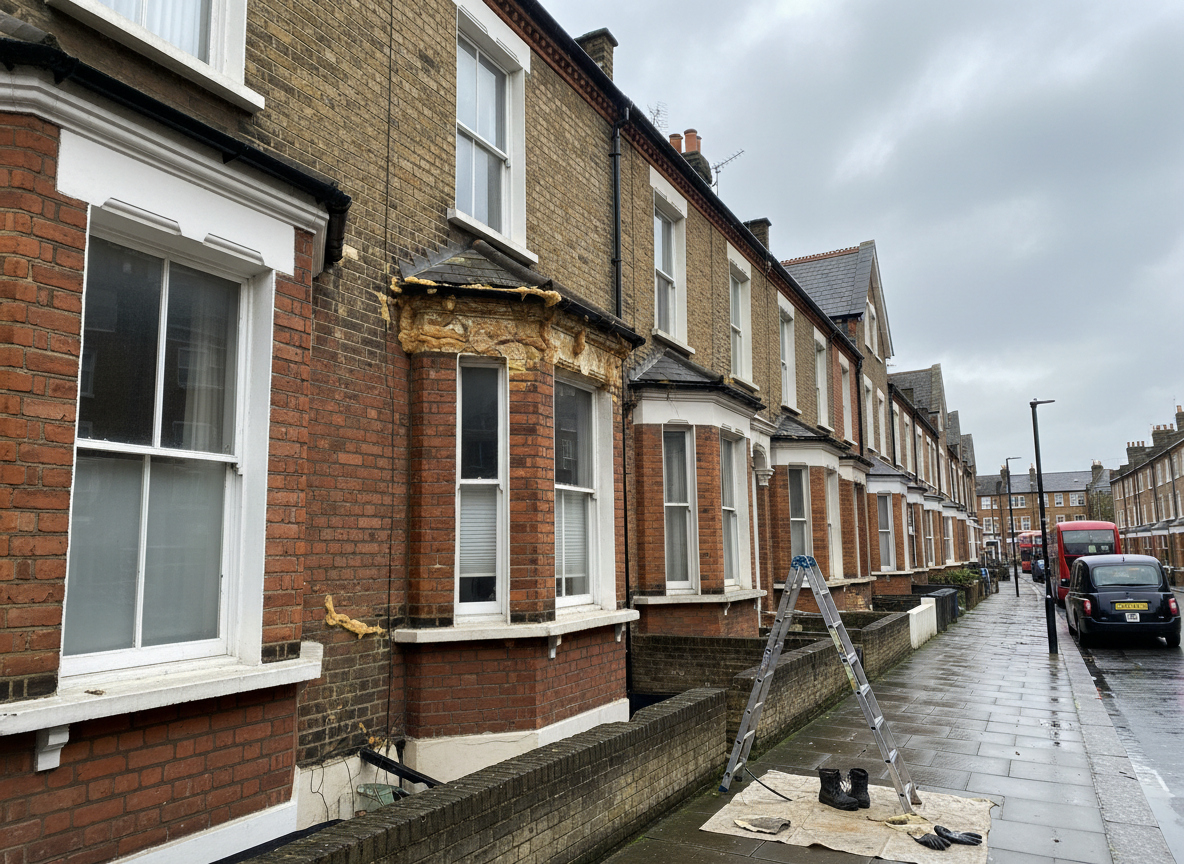
In London terraced houses built before 1950, spray foam insulation problems typically surface as trapped moisture leading to timber decay and mold within 5–10 years of application, particularly in lofts where ventilation is limited by party walls shared with neighboring properties in areas like Westminster and Camden.
Visual Signs of Moisture Trapping
Terraced houses in London feature narrow roof voids and solid brick walls that limit airflow once spray foam is applied directly to the underside of the roof deck. Homeowners often notice dark staining along ceiling joists or peeling paint on upper floor ceilings after periods of heavy winter rain, which is common in the London area. These signs appear because closed cell foam can prevent the roof from breathing, allowing condensation to collect against rafters during the damp months from October through March. Checking for musty odors in bedrooms directly below the loft provides another early clue, as the foam seals in any water that enters through slipped tiles common on older slate roofs in Islington and Hackney.
Structural Effects on Victorian Terraces
Many London terraced properties from the late 1800s have thin rafters that were never designed to carry the added weight or vapor barrier created by spray foam. Over time this leads to sagging roof lines visible from the street in neighborhoods such as Southwark and Lambeth, where rows of connected houses amplify the issue across multiple properties. Rotting timber at the eaves often goes unnoticed until gutter overflows during autumn storms accelerate the damage. The shared walls between terraces mean problems in one house can affect the next, making early detection important before repairs involve multiple owners.
Mortgage and Lender Concerns in London
Surveyors frequently flag spray foam in London terraced houses during valuations because it obscures the roof structure and raises questions about long-term integrity. Lenders may require removal before approving loans on properties in Tower Hamlets or Greenwich where older stock dominates. This process involves assessing whether the foam has caused irreversible deck damage, especially in homes exposed to the region's consistent high humidity levels. Owners in these situations benefit from professional insulation assessment to document conditions before issues affect sale timelines.
Practical Steps for London Homeowners
Start by inspecting the loft during daylight hours for any bulging or discolored foam surfaces, then note any changes after heavy rain events typical in the capital. Document findings with photos to share with specialists who understand local building stock. If signs point to deeper problems, consider services like loft spray foam removal or mortgage lender spray foam removal to restore proper ventilation. Reviewing local building regulations for spray foam removal in London helps clarify what work requires permits in conservation areas common throughout Camden and Westminster.